NEWScrapingAnt MCP for Claude Code, Cursor & Windsurf — try it free →
Skip to main content

Web Scraping Blog — Page 18

Web Scraping with PHP - Quick Starter Guide

· 23 min read
Oleg Kulyk
Co-Founder @ ScrapingAnt

Web Scraping with PHP - A Starter Guide

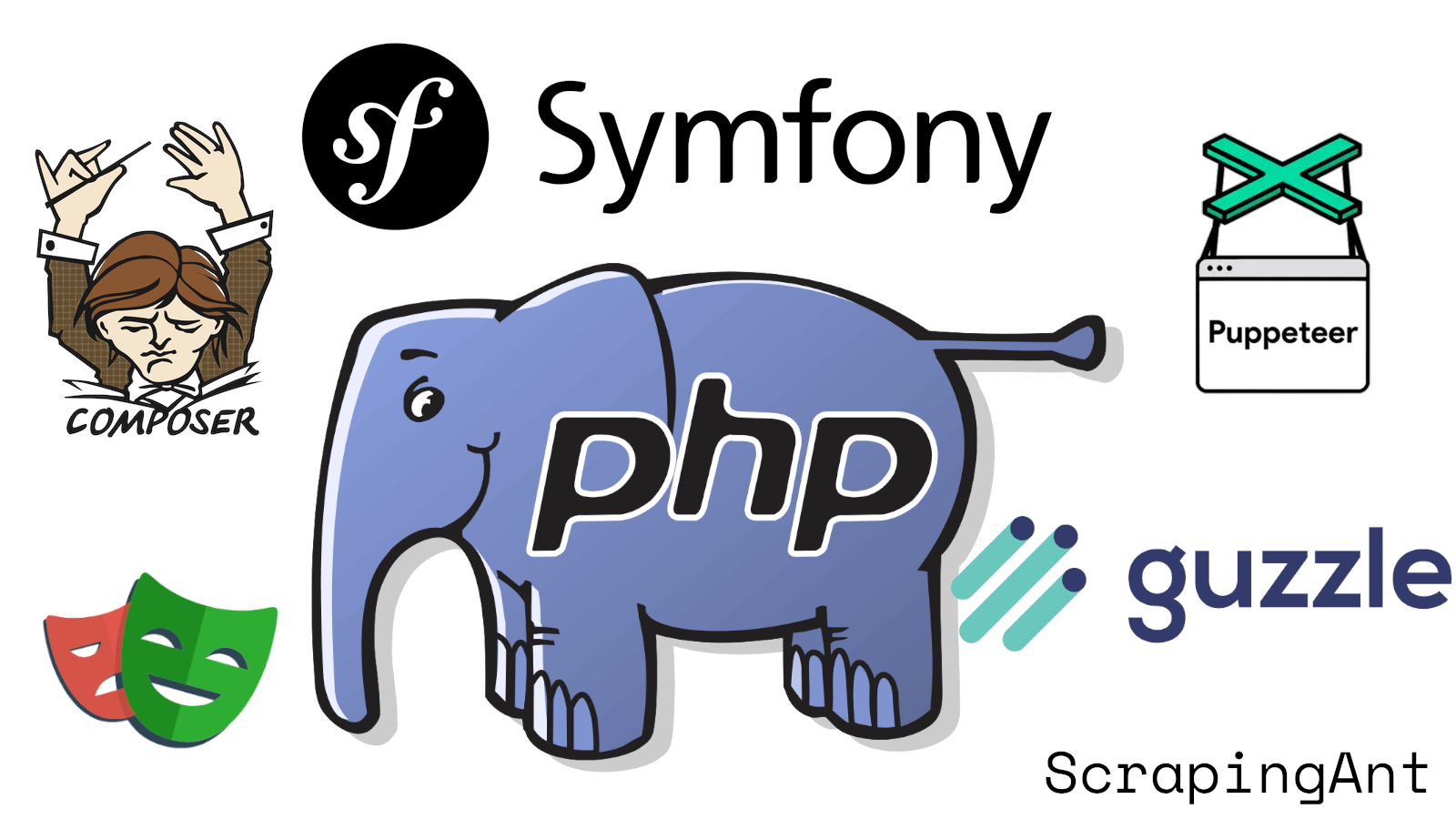
Web scraping is a technique used to extract data from websites by parsing HTML content. In the realm of PHP development, web scraping has gained immense popularity due to the robustness and versatility of available libraries. This comprehensive guide aims to explore the various PHP libraries, techniques, and best practices involved in web scraping, providing developers with the tools and knowledge to efficiently extract data while adhering to ethical and legal considerations. By leveraging web scraping, developers can automate data collection processes, gather insights, and build powerful applications that interact with web data in meaningful ways.

PHP offers a wide array of libraries specifically designed for web scraping, each with its unique features and capabilities. From simple libraries like Goutte and PHP Simple HTML DOM Parser to more advanced tools like Symfony Panther and Ultimate Web Scraper Toolkit, developers can choose the most suitable library based on their project requirements and complexity. Additionally, understanding the techniques involved in parsing and extracting data, handling JavaScript-driven sites, and implementing pagination handling is crucial for building effective web scraping solutions.

It is essential to approach web scraping with a strong emphasis on ethical practices and legal compliance. Respecting a website's Terms of Service, adhering to robots.txt directives, and obtaining permission from website owners are fundamental steps to ensure responsible web scraping. Furthermore, developers must be aware of data protection regulations and avoid scraping personal or copyrighted data without proper authorization. This guide will also delve into technical best practices, such as leveraging APIs, implementing rotating proxies, and utilizing headless browsers, to enhance the efficiency and reliability of web scraping projects.

As you venture into the world of PHP web scraping, it is important to follow best practices and ethical guidelines to maintain a healthy and respectful web ecosystem. By doing so, developers can harness the power of web scraping to unlock valuable data and insights while contributing to a positive online community.

Handling Scrapy Failure URLs - A Comprehensive Guide

· 11 min read
Oleg Kulyk
Co-Founder @ ScrapingAnt

Handling Scrapy Failure URLs - A Comprehensive Guide

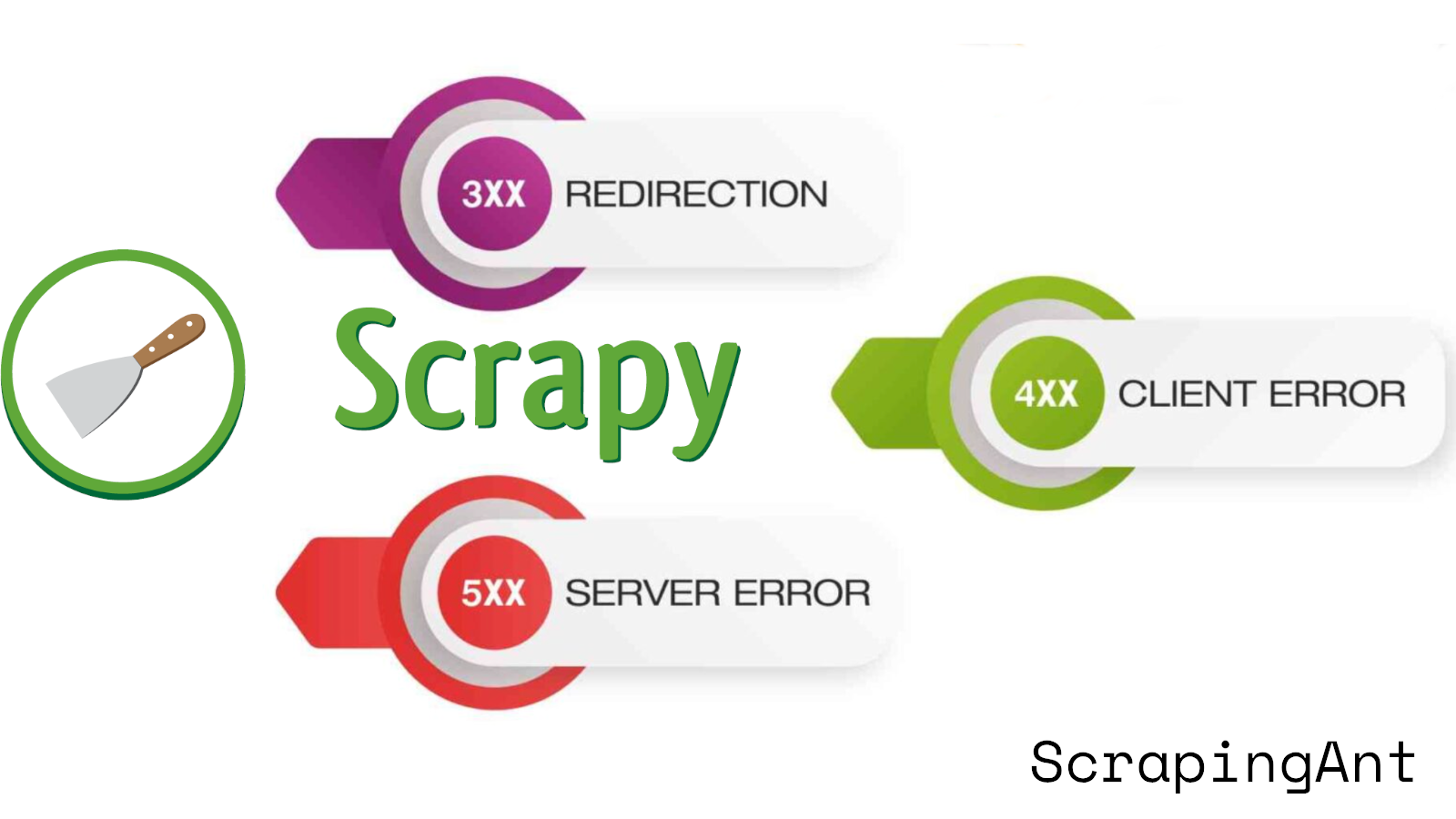
Web scraping is an increasingly essential tool in data collection and analysis, enabling businesses and researchers to gather vast amounts of information from the web efficiently. Among the numerous frameworks available for web scraping, Scrapy stands out due to its robustness and flexibility. However, the process of web scraping is not without its challenges, especially when dealing with failures that can halt or disrupt scraping tasks. From network failures to HTTP errors and parsing issues, understanding how to handle these failures is crucial for maintaining the reliability and efficiency of your scraping projects. This guide delves into the common types of failures encountered in Scrapy and provides practical solutions to manage them effectively, ensuring that your scraping tasks remain smooth and uninterrupted. For those looking to deepen their web scraping skills, this comprehensive guide will equip you with the knowledge to handle failures adeptly, backed by detailed explanations and code examples. For more detailed information, you can visit the Scrapy documentation.

Human-Like Browsing Patterns to Avoid Anti-Scraping Measures

· 16 min read
Oleg Kulyk
Co-Founder @ ScrapingAnt

Human-Like Browsing Patterns to Avoid Anti-Scraping Measures

Web scraping has become an indispensable tool for data collection, market research, and numerous other applications. However, as the sophistication of anti-scraping measures increases, the challenge for scrapers to evade detection has grown exponentially. Developing human-like browsing patterns has emerged as a critical strategy to avoid anti-scraping mechanisms effectively. This report delves into various techniques and strategies used to generate human-like browsing patterns and discusses advanced methods to disguise scraping activities. By understanding and implementing these strategies, scrapers can navigate the intricate web of anti-scraping measures, ensuring continuous access to valuable data while adhering to ethical and legal standards.

Best Proxies for AI Web Agents - What to Use in 2024

· 18 min read
Oleg Kulyk
Co-Founder @ ScrapingAnt

Best Proxies for AI Web Agents - What to Use in 2024

Proxies serve as an indispensable component for AI web agents, particularly in the context of web scraping APIs. As the digital landscape becomes increasingly complex, the necessity for AI web agents to access and extract data efficiently, reliably, and securely has never been more critical. Proxies act as intermediaries that mask the AI agent's IP address, distribute requests across multiple IPs, and provide the anonymity needed to circumvent geo-restrictions and prevent IP bans. This intermediary role is crucial for maintaining the performance and reliability of AI web agents during web scraping tasks.

Understanding the various types of proxies, such as residential, datacenter, and mobile proxies, is essential for selecting the most suitable option for specific web scraping needs. Residential proxies, for instance, are highly reliable and appear as legitimate users, making them ideal for scraping websites with stringent anti-scraping measures. On the other hand, datacenter proxies offer high-speed data extraction but are more prone to detection and blocking. Mobile proxies are particularly effective for bypassing geo-restrictions due to their dynamic nature.

The integration of proxies with web scraping APIs enhances performance by distributing requests across multiple IP addresses, thereby avoiding detection. This ensures higher success rates and more efficient data extraction. However, challenges such as IP rotation, geo-targeting, and maintaining speed and reliability must be managed effectively. Providers like ScrapingAnt offer automated IP rotation features and advanced geo-targeting options to address these challenges.

As we look to the future, the integration of proxies with advanced AI technologies and the increasing demand for mobile proxies are notable trends. Providers like ScrapingAnt are at the forefront of this evolution, offering cutting-edge proxy solutions that enhance the capabilities of AI web agents.

States Most Vulnerable to Identity Theft and Fraud, 2024

· 21 min read
Oleg Kulyk
Co-Founder @ ScrapingAnt

States Most Vulnerable to Identity Theft and Fraud, 2024

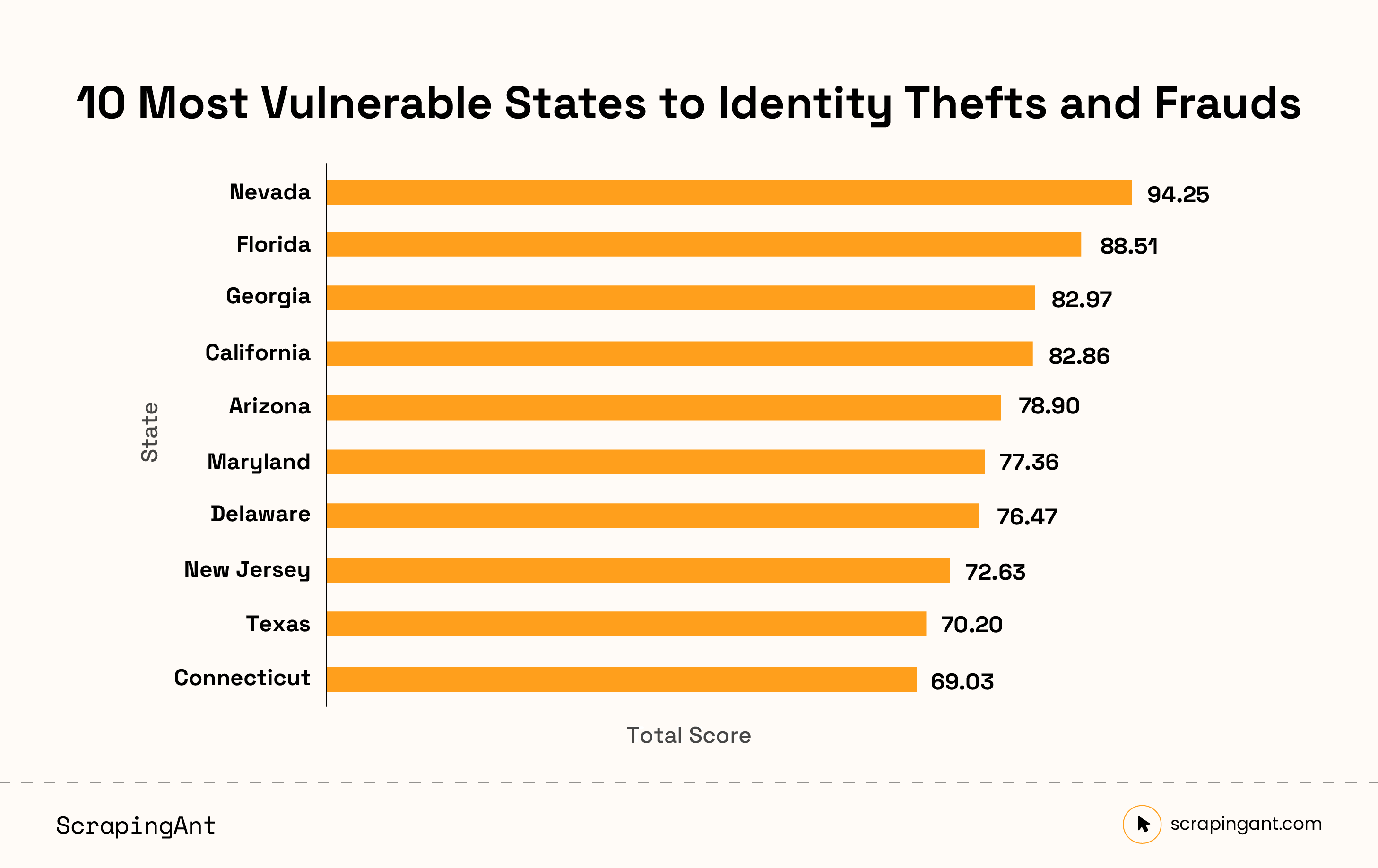
Identity theft and fraud are escalating concerns for millions of Americans. In 2023, the Federal Trade Commission (FTC) received nearly 5.4 million complaints related to these crimes, which translates to 14,773 daily reports. The financial impact is equally alarming, with losses from fraud exceeding $10 billion last year.

Our study examines identity theft and fraud in America for 2024, utilizing the latest data from the Federal Trade Commission (FTC). We analyzed the prevalence of these incidents, looking at factors such as the number of reports per capita and total financial losses. We also examined the types of fraud and identity theft reported, including credit card fraud, imposter scams, and issues with credit bureaus.

How to Set Up Residential Proxies: Credentials, curl, Sticky Sessions

· 9 min read
Oleg Kulyk
Co-Founder @ ScrapingAnt

How to set up residential proxies

Buying residential proxies starts with the workload: which locations you need, whether related requests must keep one exit IP, and how much traffic your client will transfer. Then choose a bandwidth allowance, collect your credentials and verify a small request before connecting your scraper.

Already run your own scraper? ScrapingAnt residential proxies add rotating HTTP/HTTPS exits, country/state/city targeting and optional sticky sessions without a vendor SDK. Start at $30/month for 5 GB ($6/GB). Higher-volume plans include 500 GB for $1,750/month ($3.50/GB) and 1,000 GB for $3,000/month ($3/GB). Compare plans and buy residential proxies on the product page.

The Benefits of Using ScrapingAnt's Web Scraping API and Markdown Data Extraction Tool for RAG and AI Agents

· 24 min read
Oleg Kulyk
Co-Founder @ ScrapingAnt

The Benefits of Using ScrapingAnt's Web Scraping API and Markdown Data Extraction Tool for RAG and AI Agents

In the rapidly evolving landscape of artificial intelligence (AI), the integration of web scraping APIs has become pivotal for the development and enhancement of Retrieval-Augmented Generation (RAG) systems and AI agents. Leading the charge in this domain is ScrapingAnt, a premier provider of web scraping API and Markdown data extraction tools. These tools are crucial in the data ingestion phase, enabling AI systems to access a diverse range of data types from multiple sources, thereby significantly boosting their performance and accuracy (Forbes).

Web scraping APIs, such as those offered by ScrapingAnt, enable the efficient collection of data from structured databases, policy documents, and websites, which is essential for the optimal functioning of RAG systems. These systems rely on accurate and current data to generate meaningful responses, making real-time data access a critical component. By integrating with large language models (LLMs) like GPT-4, ScrapingAnt’s APIs enhance the capabilities of RAG systems, making them ideal for applications ranging from customer service chatbots to data-driven decision support systems.

Moreover, ScrapingAnt’s tools are designed to handle dynamic content, adapt to changing website structures, and bypass advanced anti-scraping measures, ensuring continuous and reliable data ingestion. These advanced features, coupled with robust data cleaning and processing capabilities, ensure that scraped data is accurate and free from inconsistencies, thereby enhancing the performance of AI models.

Ethical considerations are also at the forefront of ScrapingAnt’s offerings. The company is committed to ethical data extraction and compliance with legal regulations, employing AI to create synthetic fingerprints that mimic genuine user behaviors while adhering to ethical standards. This ensures that web scraping activities are conducted responsibly, respecting privacy and intellectual property rights.

This report delves into the multifaceted role of web scraping APIs in enhancing RAG systems and AI agents, exploring their applications, technological advancements, ethical considerations, and future prospects. Through this comprehensive examination, we aim to highlight the indispensable value of ScrapingAnt’s tools in the AI ecosystem.

The Benefits of Using Markdown for Efficient Data Extraction

· 23 min read
Oleg Kulyk
Co-Founder @ ScrapingAnt

The Benefits of Using Markdown for Efficient Data Extraction

Updated 2026-10-26

Added a section that converts a page to Markdown with the ScrapingAnt Markdown endpoint, run once against the live API on 2026-10-26. The rest of the article was not re-tested in this update.

Markdown has emerged as a pivotal format for data scraping, especially in the context of Retrieval-Augmented Generation (RAG) systems. Its simplicity and readability make it an ideal choice for data extraction, providing a format that is both easy to parse and process programmatically. Unlike more complex markup languages such as HTML, Markdown's plain text formatting syntax reduces the complexity of parsing documents, which is particularly beneficial when using advanced parsing algorithms. The lightweight nature of Markdown further enhances its suitability for data scraping tasks, as it contains fewer elements and tags, thereby reducing the overhead involved in the scraping process.

Consistency in formatting is another key advantage of Markdown. With uniform structures such as headings and lists, Markdown ensures that data remains consistently formatted across documents, simplifying the scraping process and enabling the creation of more reliable algorithms. Additionally, Markdown's ease of conversion to other formats like HTML, PDF, and DOCX allows for flexible data handling and presentation, facilitating further analysis and reporting.

A significant benefit of Markdown lies in its compatibility with version control systems such as Git. This compatibility is crucial for RAG data scraping projects that require meticulous tracking of changes and maintenance of different data versions, ensuring data integrity and traceability. Moreover, Markdown integrates seamlessly with various data analysis tools and platforms, such as Jupyter Notebooks, allowing for a cohesive workflow where code, data, and narrative text are combined in a single environment.

Markdown also supports metadata inclusion through front matter, which provides additional context to the data, aiding in more effective filtering and categorization during the scraping process. The extensibility of Markdown with plugins further enhances its functionality, allowing for the representation of more complex data structures. With a robust community and ecosystem, numerous resources are available for working with Markdown, ensuring efficient and accurate data extraction processes.

The performance and efficiency of Markdown in data scraping tasks are further underscored by its minimalism, which requires less computational power for parsing and processing compared to more complex formats. This efficiency is particularly advantageous for large-scale RAG data scraping projects. Overall, Markdown's combination of simplicity, readability, minimalism, and robust ecosystem makes it the best format for RAG data scraping, especially when leveraged with advanced tools and platforms like ScrapingAnt.

LLM Instruct vs Chat - A Comprehensive Analysis

· 16 min read
Oleg Kulyk
Co-Founder @ ScrapingAnt

LLM Instruct vs Chat - A Comprehensive Analysis

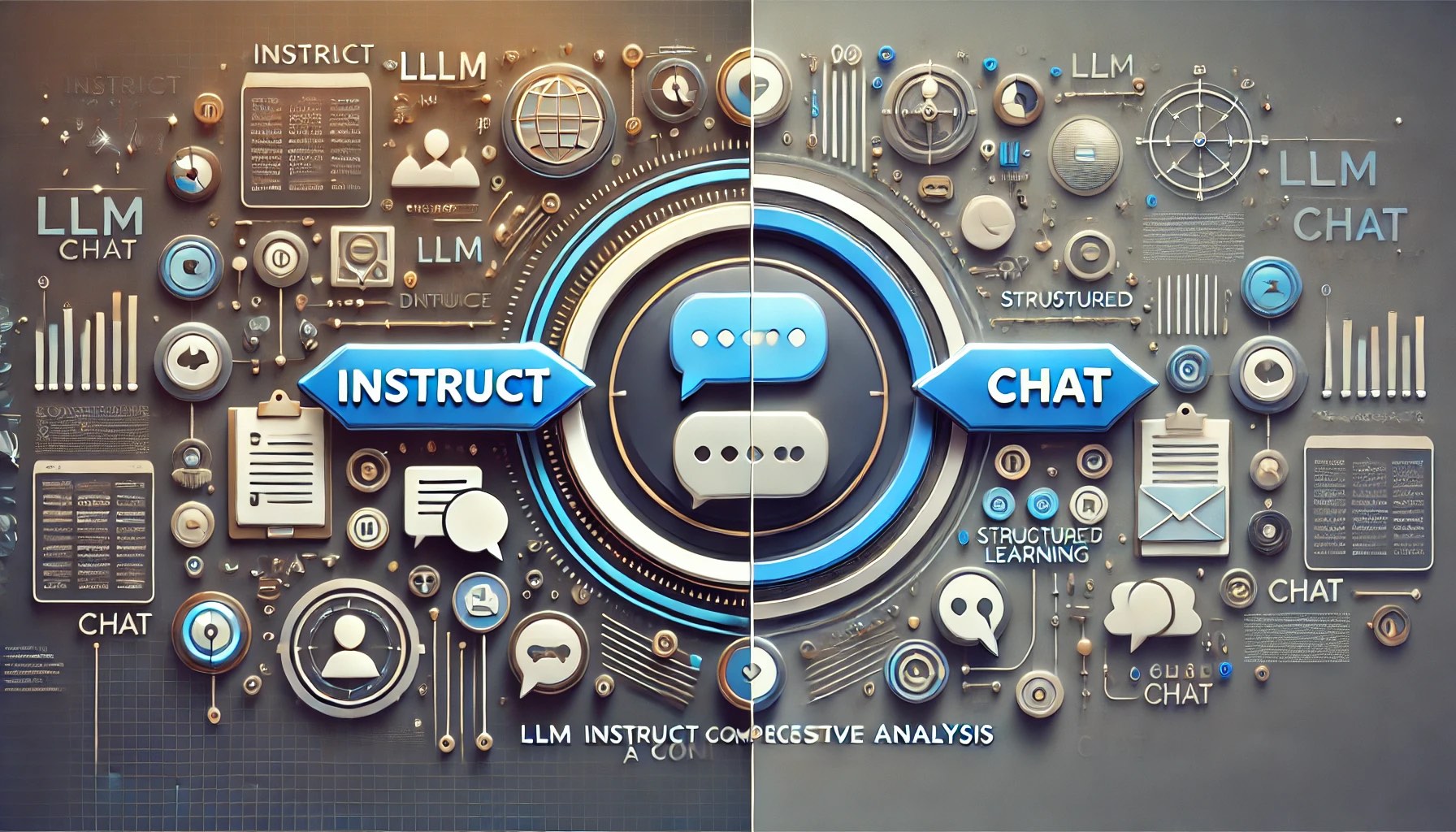
Large Language Models (LLMs) have transformed the landscape of Natural Language Processing (NLP), enabling advanced text generation and comprehension. Among the notable innovations in this field are the Chat and Instruct modes, each serving distinct purposes and applications. The Chat mode is designed for conversational interactions, facilitating dynamic and contextually relevant dialogues, making it ideal for virtual assistants and customer service bots. In contrast, the Instruct mode is tailored for task-specific instructions, excelling in generating precise outputs based on clear directives, such as data summarization and translation.

Understanding the functional differences, technical implementations, and applications of these modes is crucial for leveraging their capabilities effectively. Chat mode's strength lies in its ability to manage multi-turn dialogues and maintain context over several interactions, which is achieved through sophisticated context windows and techniques like reinforcement learning from human feedback. On the other hand, Instruct mode's efficiency in executing specific tasks without the need for context retention makes it highly effective for precise and focused outputs.

This comprehensive analysis delves into the technical intricacies, performance metrics, and real-world applications of both modes, drawing on examples from various sectors such as healthcare, education, and customer service. By examining the strengths and limitations of Chat and Instruct modes, this report aims to provide a nuanced understanding of how these technologies can be harnessed for diverse applications, while also addressing challenges related to context management, ethical considerations, and future directions in LLM development.

Leveraging Web Scraping with ChatGPT for SEO Optimization in 2024

· 17 min read
Oleg Kulyk
Co-Founder @ ScrapingAnt

Leveraging Web Scraping with ChatGPT for SEO Optimization in 2024

In the digital age, Search Engine Optimization (SEO) remains a cornerstone for businesses aiming to improve their online visibility and drive organic traffic to their websites. As the landscape of SEO continues to evolve, the integration of advanced technologies has become paramount for staying competitive. One such technology is web scraping, a method that allows for the extraction of vast amounts of data from websites. In 2024, the role of web scraping in SEO has expanded significantly, providing businesses with the ability to perform competitive analysis, keyword research, content optimization, and real-time data aggregation with unprecedented efficiency.

Simultaneously, the advent of sophisticated AI models like OpenAI's ChatGPT has opened new avenues for enhancing web scraping capabilities. Although ChatGPT cannot directly scrape websites, it can assist in writing and optimizing code for web scraping, thereby automating and streamlining the data extraction process. This integration not only reduces the time and effort required for web scraping but also improves the accuracy and quality of the collected data.

This research report delves into the synergistic relationship between web scraping and ChatGPT, exploring how their combined use can revolutionize SEO strategies in 2024. By examining the growing role of web scraping in SEO, the integration of ChatGPT with web scraping tools, and practical applications for SEO professionals, this report aims to provide a comprehensive understanding of how these technologies can be leveraged to gain a competitive edge in the digital marketplace.